
In early-January, I woke up one morning, looked at a client’s ad account and thought, “This account should be doing better.”
I went to my desk and looked at campaign metrics the first seven days of the year. We had two amazing static ads delivering okay results but struggling with low spend and higher-than-usual Q1 CPMs.
One day I’ll write about how to interpret your Cost-per-Mille or CPM metric in the right context for scaling your ad account. But in this case, after watching my client’s CPMs for a few days, it was clear that the campaigns needed to be fueled with better creative and more spend. These two campaigns were stalling in ‘learning’ due to budget and content constraints. All I had to do was convince my client that more money was necessary, even though the ROAS and purchase volume we were aiming for had not yet been attained.
It can be difficult to ask a client for more money when the momentum is not there to help bolster the argument. It always carries it share of risks—especially with limited data on what high performing creative looks like for an account like this—but I was confident in my data-driven instincts. On one Friday afternoon, I sat down with the client and told them:
“We have the signals telling us that we have winning ads and we have a winning post-click experience. All we need is more dollars and more traffic.”
Setting the Stage
I had been steadily managing these campaigns with decent returns but wanted to push the envelope. My plan was simple: utilize my set budget caps and lean into my simplified campaign structure to observe how a spend increase would affect overall efficiency and ROAS.
I requested a $10,000 budget lift but was only approved for $4,000 through the end of January. Either way I considered this a success. Sometimes all it takes is a 10-20% budget increase to see better results anyways. On top of that the client had a new batch of creative that we could test with greater runway. As far as I was concerned, I got more than just a budget lift – I also received fresh video creative that could only increase our chances of success. On a Saturday morning, after I finished making breakfast, I sat down on my kitchen table, uploaded the fresh creative into our existing campaigns, pressed “Publish,” and monitored the data closely over the next 7 days.
My hypothesis was straightforward: with more spend we could break through the algorithm’s restrictive targeting and lean into our audience budget caps to reach purchase-ready users at scale and deliver healthier CPAs.
The Results (In 15 Days!!)
From the start, this approach felt like a strong contender for high-intent conversions. Here’s what flipping the switch yielded in exactly 15 days:
- Spend: $5,175 (+580%)
- CTR: 5.3% (+212%)
- Cost per Purchase: $15 (-25%)
- Purchase ROAS: 3.07 (+52%)
A standout metric was that high click-through rate, which signaled our creative and targeting resonated with the audience. More importantly, the cost per purchase went from $20 to $15 and remained stable even as we increased spend. The end result? A strong ROAS of 3.07X and a ~$15 CPA, all hallmarks of improved efficiency and profitability. The screenshots below also outline how pivotal these results are in comparison to the last 12 and 24 months of their account history. It was definitive: in January 2025 this client’s Meta ads achieved profitability unlike they had seen before.
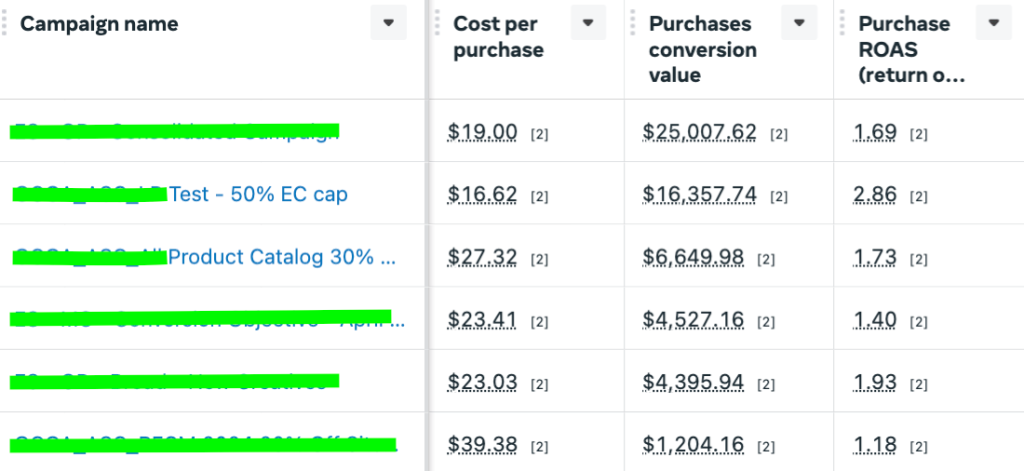
Pivot table showing campaign results within the last 24 months. Source: Facebook Ads Manager
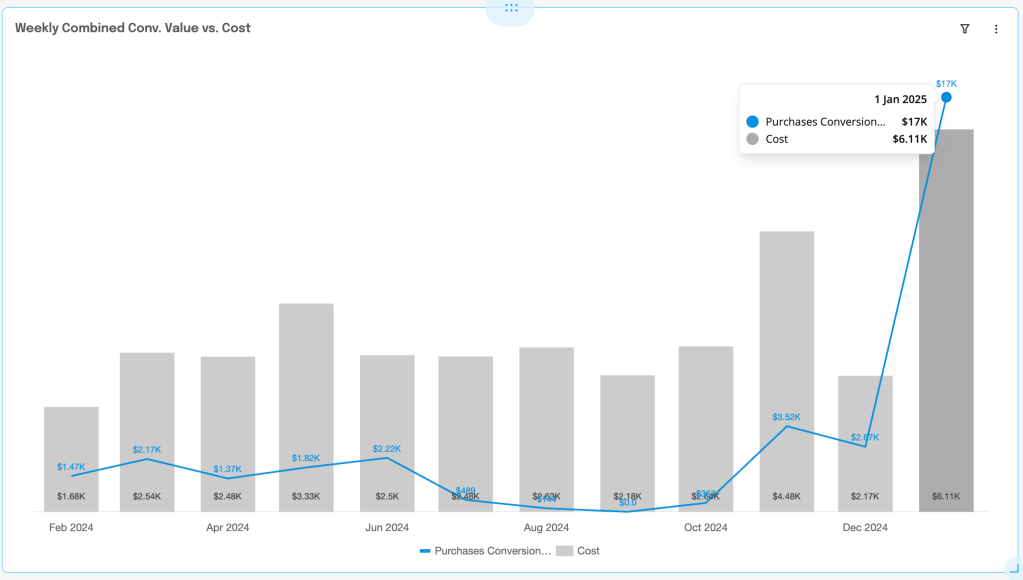
Combo chart showing last 12 months of cost relative to conversion value. Source: Funnel.io Data Visualization Software
Why This Approached Worked
- Strategic Budget Caps
By capping engagement spend differently on each campaign, I effectively kept overspending on engaged audiences in check and nudged the algorithm to focus on high-intent, new customers. - Creative Mix
The campaigns leveraged fresh angles. While one campaign emphasized brand storytelling and product results of their hero products, the other campaign showcased the entire product range to a broader audience. - Balanced Metrics
I tracked a cluster of KPIs, with CTR, cost per purchase, and ROAS being some of the most vital. This holistic view revealed exactly where each campaign shined (and where we might need to refine).
The Takeaway
All it took were 15 days to validate my hunch that strong creative and targeted budget increases, can boost ROAS without making it more expensive to acquire customers. Each campaign had its separate purpose whether it was to bring efficiency and strong returns, or expand brand awareness among a larger pool of prospects.
This impressive turnaround always remind me that bold moves often lead to bold results, especially when you know how to interpret the data correctly. By pushing boundaries just enough—and monitoring the numbers like a hawk—I uncovered a winning formula that strikes a sweet spot between efficiency and new audience discovery.


