
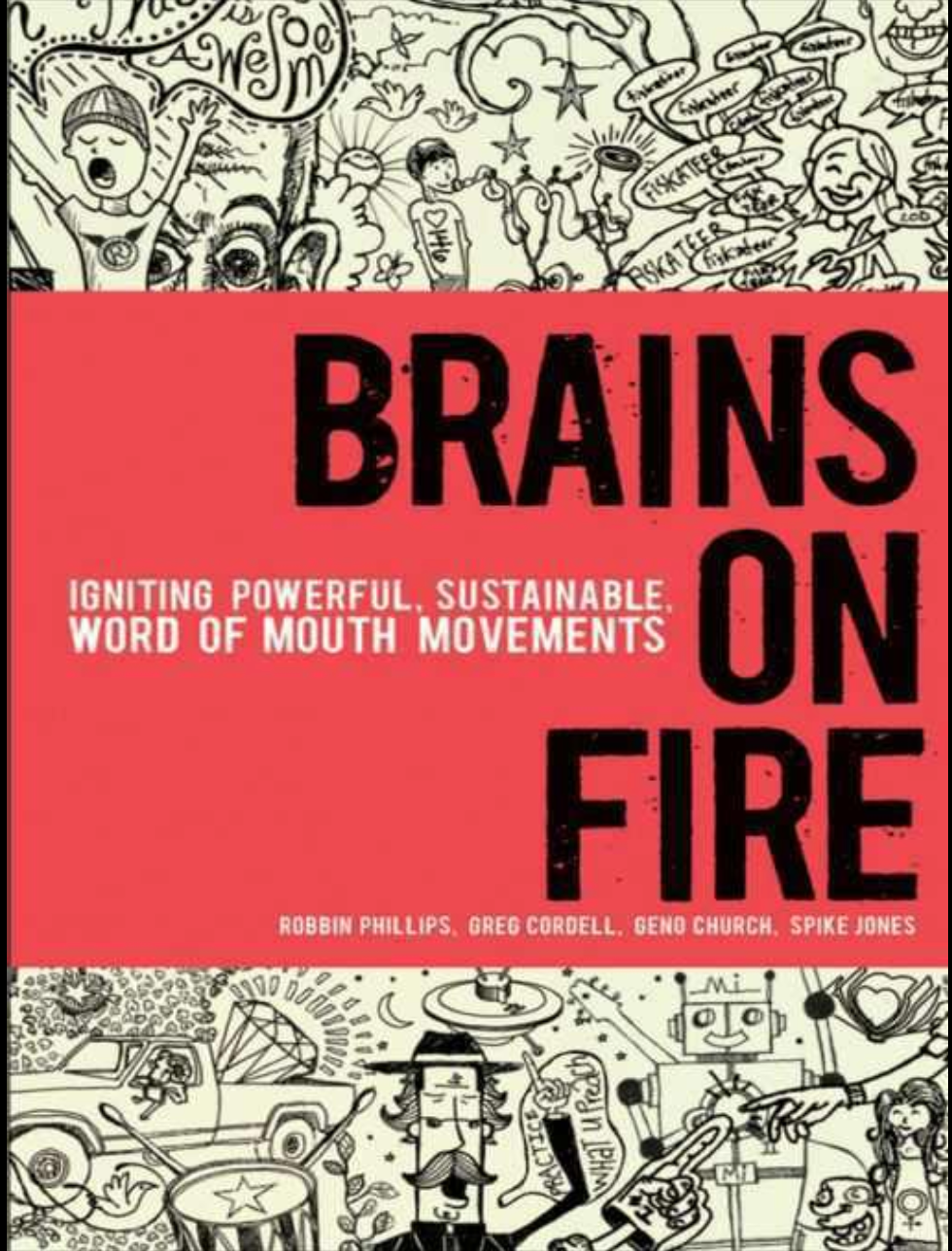
In the first two years of my marketing career, which by the way started as a founder to a beauty brand, I focused most of my energy into building a brand. I read Brains on Fire Igniting Powerful, Sustainable, Word of Mouth Movements by Robbin Phillips, Greg Cordell, Geno Church, and Spike Jones in late 2013 which made me really think about branding. I was new to the marketing world, but it made the most sense to me to build what the book calls a movement, not a campaign. I wanted to create a brand that captured hearts and minds, not a brand that was introduced to a target audience through advertising that interrupted the flow of their feeds or their minds. I thought, why would I want to bribe a potential customer to love me by giving them a discount? It made better business sense to build a brand that the people organically felt connected to. It made sense to get them hype about a product and brand that has seen their struggle and done something about it.
Now almost 10 years since I first opened that book, after spending thousands (probably millions) on running ads on Facebook and Google, I can now see how my thought process was correct but mostly flawed in it’s approach. Branding, as we know it is still the process of creating a unique name, design, symbol, or combination of these elements that identifies and distinguishes a company or product from its competitors. However, the meaning now closely relates to what Phillips and crew refer to in their book as a ‘movement’:
The ad rags call them out, and we all gather around and applaud, until we forget about it 20 minutes latter because so few of them are memorable anymore. That brochure you designed is really just pretty trash, because that’s where it’s going to end up 10 seconds after someone looks at it. You’re just creating more campaigns. And while campaigns try like hell, it’s really hard to make a campaign into a movement. There’s a big difference between the two. Movement is also a word that’s being thrown around a lot these days, especially by marketing folks. But if it feels, looks, and smells like an advertising campaign, then guess what: It’s an ad campaign. Not a cultural movement or any other kind. Ads are a tool. Movements are the workshop. You have to understand the tactics before it makes any sense to implement. And when you start to look at your marketing challenges in the context of a movement, your world starts to change.
Now 22 year old me, with zero marketing experience read this passage and ran with it. I swore I would not run any ads. I swore that I would dedicate myself to creating good content. I worked on building an email list, grew it to about 400 subscribers, and pushed out a newsletter every Friday. I wrote updates to our growth, new brands we were collaborating with, and new makeup to try and none of the newsletters, NONE, included a call-to-action. I worried about sounding salesy in these emails – I didn’t want to risk turning subscribers off.
Did that for three years and got ZERO sales.
From 2015 through 2018 I moved on to a influencer/PR/social strategy. Amazing social media account, got a great boost in traffic from an epic influencer YT post and even got featured in a few awesome web publications including BuzzFeed. ZERO sales.
Then in mid-2019, I looked at the money pit this business was becoming and finally delved into ads. I hired a guy to run ads for me and also made ZERO sales lol. Oh man, 2013 – 2019 was really a wild goose chase.
It wasn’t until 2020, when I learned how to run ads, that I was consistently making sales. But, even with nearly 10 years of losing thousands of dollars in trying to build a brand AND then going on to run highly successful ad campaigns that created predictable and scalable flows of revenue, I realized two things about branding:
- Branding is still frickin’ important, and;
- Branding is frickin’ hard.
The branding + performance approach you should take now
I hope you took from my story the understanding that despite my failures with branding, I still consider branding to be super important to the overall growth of a business. It took me a very long time to realize that I am a performance marketer. However, I can appreciate and have great respect for brand marketers now that I can see how much a strong impact branding has on making performance efforts go further for cheaper.
Now what do I mean? All the lovely metrics performance marketers regard as holy: CPC, CTR, ROAS, CPA, MER and CLTV, all reach levels of hyper success when merged with a powerful brand.
In my latest role, I was able to see how this relationship made my ads perform better than industry average. Why? Because they were already a well known brand. They had a great product. They knew their customer and kept delivering home runs to their customers every single time.
Branding, as branding folks will also argue, goes beyond a logo or a color scheme. Those things are a part of it but definitely not all. In fact, most of it is what Phillips, et al, spoke about in their book. A ‘movement’ or good branding is:
- Sustainable
- People-powered
- Driven by emotion
- Rooted in passion
Excellent branding ignites word of mouth where people are the medium. All of this creates the best backdrop for successful ad campaigns which in performance terms means more marketing efficiency, lower costs, and better ROI.
And for brands who have relied on performance as their primary growth strategy…
Your time will come when your performance efforts will plateau. Tom Roach, VP of Brand Strategy at Jellyfish, a UK-based ad agency, spoke of the stage in a brand’s journey where performance activity isn’t enough or stops yielding incremental sales.
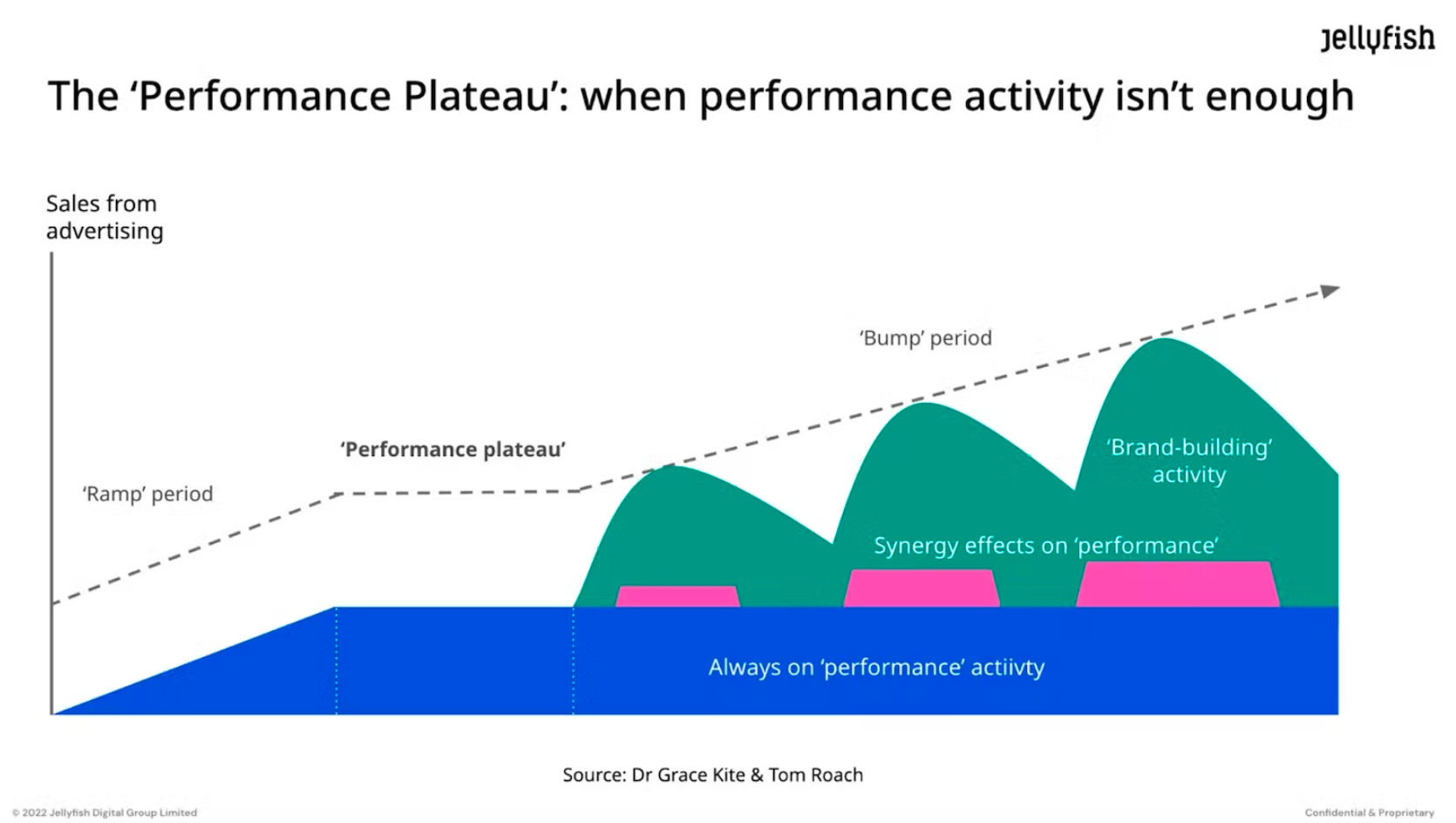
His fourth solution for when brands hit the dread performance plateau is to refocus on branding:
If you’re too reliant on paid ads, then you need to develop your base sales. To do that you’re going to need to build a stronger brand. A stronger brand will mean stronger residual awareness, familiarity and understanding of what you offer that can generate future cashflow. A brand isn’t a luxury, it’s future cashflow.
Brands can also, as he suggests, supercharge their branding efforts with performance in a strategy that gets the best of both worlds:
But some excellent new research exploring the power of digital channels to drive both short- and long-term ROI suggests many digital channels are also able to deliver both.
Branding is just as crucial during the nascent stages of brand building but can be a helpful growth tool in a performance-built brand.
Your killer brand strategy should include
- Consistency: Branding is all about creating a consistent image that people can recognize and identify with your business. This means keeping your branding consistent across all touch-points, including your logo, color scheme, typography, and messaging.
- Clarity: Your branding should be clear and easily understandable. People should be able to understand what your brand is about and what it stands for without having to guess.
- Differentiation: Your branding should help set you apart from your competitors. Your brand should be unique and communicate what makes you different.
- Authenticity: Your branding should be authentic and true to your business. People should be able to trust your brand and believe in what you stand for.
- Emotional appeal: Your branding should evoke emotions and feelings in your audience. This helps create a connection with your brand and can help build brand loyalty.
- Adaptability: Your branding should be adaptable and able to evolve as your business grows and changes. This means being open to refreshing your branding as needed to keep it relevant and effective.
But above all, put some respek on brand marketers’ name, LOL. Branding, like most marketing, is a long, slow game and ROI is difficult to account for, but trust me, the largest brands became household names because of what they represent to their customers.


