
If you’ve ever ran Google ads, you are aware of the newest ad campaign type called Performance Max (PMAX). PMAX initially brought advertisers great results but a few months later, serious limitation started showing. Aside from being an ad campaign type that automatically bids and targets audiences discovered by machine learning, PMAX appear across all of Google’s ad inventory: Display, Search, Shopping, YouTube etc. All you have to do is load it up with content.
I built out PMAX campaigns in two of my previous roles as soon as Google rolled them out. I saw limitations the moment I wanted to analyze the results after running them for a week. I could not analyze results beyond the generalized metrics Google showed me within PMAX ad reporting. Also, I couldn’t get reporting on important metrics such as conversion rate across new customers vs. returning customers segments. Nor could I get any data about which Google placement was converting the strongest or any breakdowns by device, time or creative. I couldn’t see which intent signal was most successful, I later learned that I needed to meticulously split every audience signal I was testing into it’s own campaign to be able to interpret the results later. I understood that PMAX was a new ad campaign type but I couldn’t really fall for the hype. Data and the ability to analyze data is the performance marketer’s superpower – we value data for what it teaches us to optimize for.
Meta, mired in it’s own privacy and iOS 14 controversies followed suit in creating their Advantage Plus Shopping campaigns. APS campaigns are meant to work like dynamic ads but with targeting and creative automatically optimized by machine learning. At my last role, I oversaw our ad account’s partnership with the Shopping Ads team at Meta as a part of the closed beta program prior to its launch. I saw a dramatic lift in ROAS in our ad account overall when I ran these ads to both the website and IG/FB shops as a conversion destination. There was more stability in the ad account which was a breath of fresh air against Meta’s erratic performance all 2021 and 2022. My immediate sign of stability: we dramatically ramped up spend (increasing spend by 20% every two days) and total ROAS remained consistently above 7X.
Like Google’s PMAX campaigns, Meta’s APS campaigns also had the same limitations in data and reporting.I suspected that both platform versions of these automated ads provided limited data because they had to conceal the inadequacies of the machine learning functionality. It reminded me of a reoccurring glitch I noticed in Meta’s CBO campaigns. CBO campaigns would start to deliver most of the budget to weaker ad sets because of engagement signals, like high CTR, as opposed to conversion signals, such as CVR. As a result you’d see the majority of your budget go toward an engaging ad that doesn’t necessarily convert as strong as the ad that has a weaker CTR but a higher CVR.
A few months later I started seeing concerns on DTC Twitter that PMAX campaigns were bringing in inflated results. They finally saw what I had long suspected: ROAS seemed high in PMAX reporting due to it’s machine learning preferring to target (or rather retarget) lower funnel segments.
While Meta and Google have a lot to improve on their new campaign types, there is a way to utilize the automation these campaigns offer to achieve the lowest cost per click and cost per acquisition. The creatives you add to these campaigns is the first step to this equation. While creatives are slightly more important, the destination is still crucial for your ads to thrive.
There are many ways to do this when you think about your customers start their journey with your brand. However, many brands overlook the power of supercharging their SEO strategy with the paid strategy, especially through Google Ads:
- Identify your target keywords: Start by identifying the keywords that are most important to your brand and that you want to target with both SEO and Paid Search. Use keyword research tools like Google Keyword Planner to find relevant keywords that have a high search volume and low competition.
- Optimize your website for target keywords: Once you have identified your target keywords, optimize your website by including them in your page titles, meta descriptions, headings, and content. Make sure your website is well-structured and easy to navigate, and that your content is high-quality and relevant to your target audience.
- Create targeted landing pages: When creating your Paid Search ads, create targeted landing pages that are optimized for your target keywords. These landing pages should include the same keywords that you are targeting in your ads, and should be designed to convert visitors into customers. If you multiple SKUs, your collection page should include keywords relevant to the category.
- Use relevant ad copy: Your Paid Search ads should include relevant ad copy that incorporates your target keywords. Make sure your ad copy is compelling and encourages people to click through to your website. One way to ensure your copy is compelling is to tie your landing pages and ad copy to objections or pain points your customer may be searching for.
- Monitor and analyze your results: Finally, monitor and analyze your results to see how your SEO and Paid Search strategies are performing. Analyze KPI from within your ad account and use tools like Google Analytics to track your traffic, conversions, and ROI, and make adjustments to your strategy as needed to optimize your results.
By aligning your SEO and Paid Search strategies, you can increase your online visibility and improve your chances of reaching high intent audiences. This is precisely what Kuru Footwear CEO Sean Mcginnis has done to profitably grow his DTC brand selling orthopedic shoes:
“We’re focusing on the bottom of the funnel. Imagine that you’ve got foot pain, you’ve got plantar fasciitis or similar, and you search for foot pain solutions. We bid on those keywords in Google and Bing. Those are major revenue drivers for us. The other big driver is our email list — selling to existing customers, repeat purchases, things of that nature.
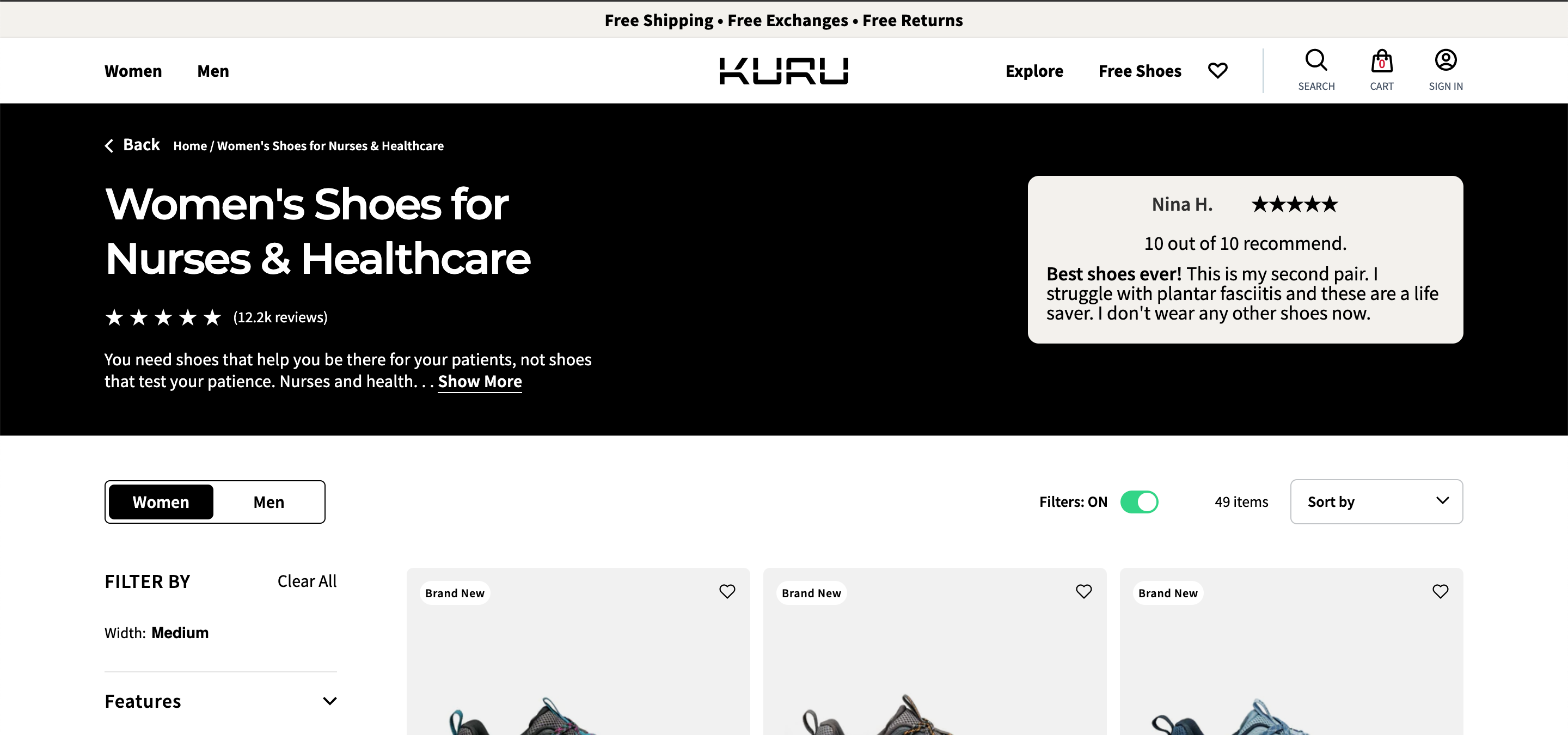
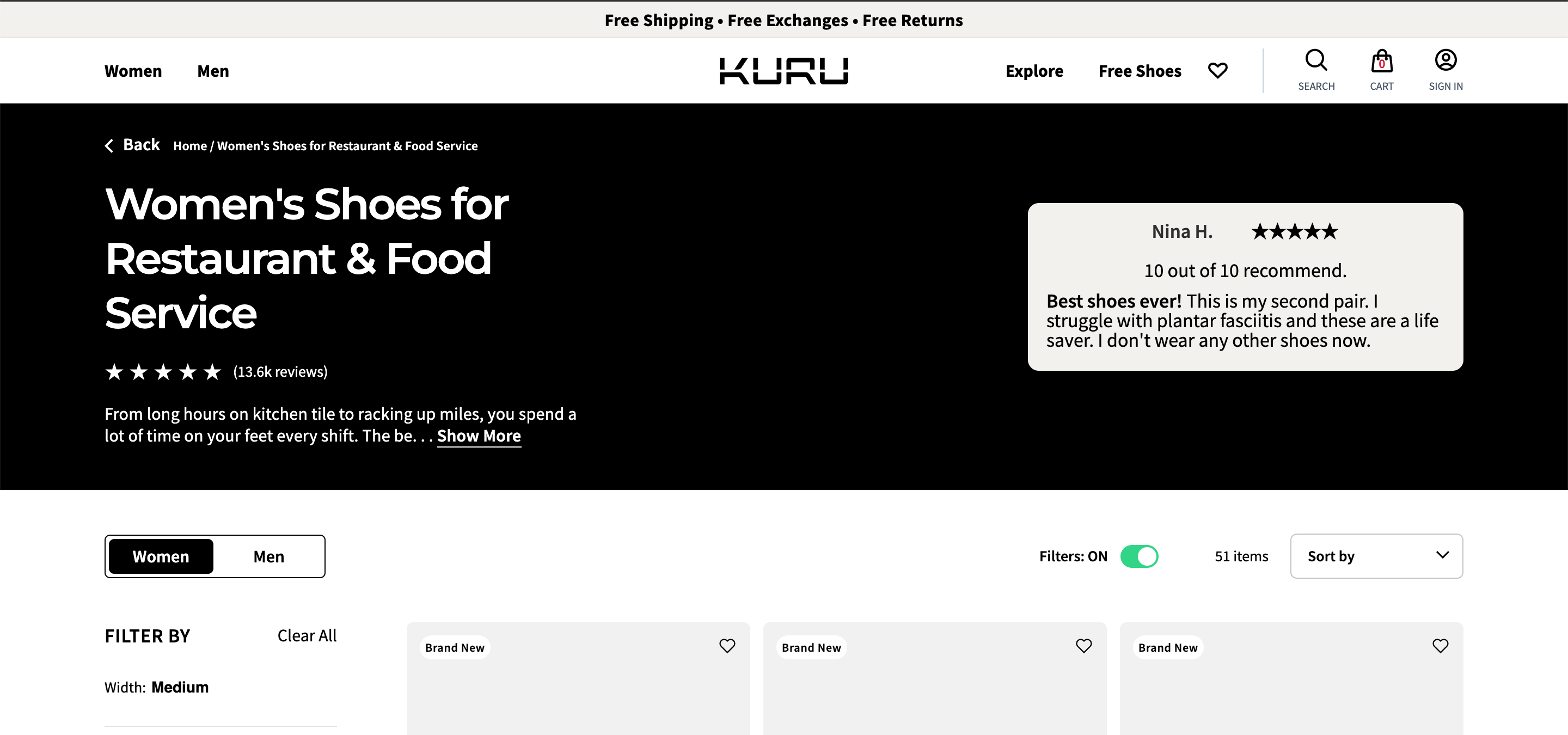
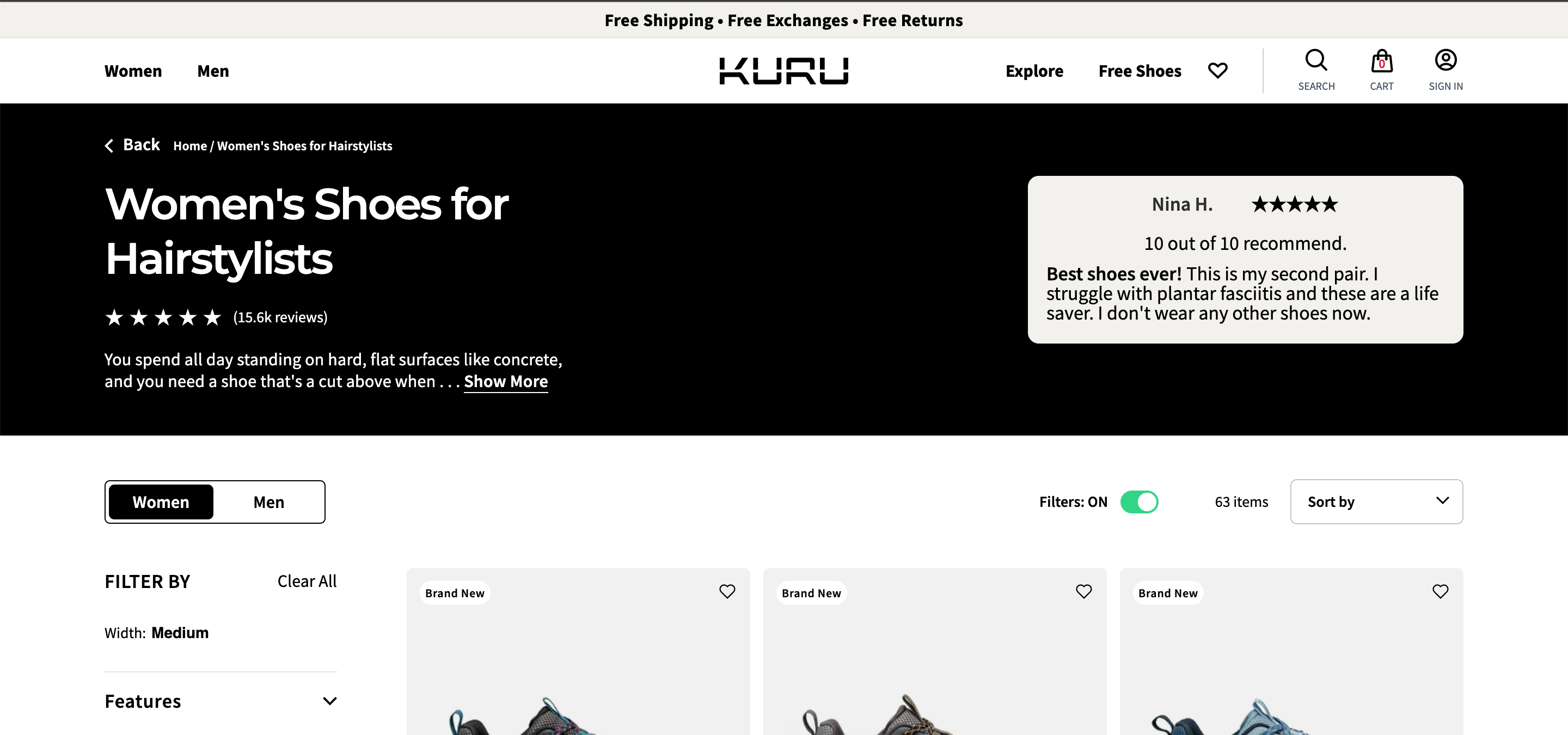
We split our paid search into two channels: branded and non-branded. Each aligns with the three categories or funnels on our site: types of foot pain, specific activities (such as hiking), and work-related.
The third category, work-related, is important to us. Many jobs require workers to be on their feet all day or walk on concrete — think delivery drivers, warehouse workers, retail employees, food service staff, nurses, healthcare, teachers.
So those are the three areas with focused keywords that we’re buying, which drive prospects into micro-funnels on our site.”
Eric Bandholz, “Paid Search Drives Kuru Footwear to 2021 Success“
This is one of many strategy posts I plan to write but I don’t recommend you carbon copy them for your business. I intend for these posts to get the wheels in your mind rolling. Why? Every brand is unique, and marketing strategies should be tailored to their unique product-to-customer story.


